Thursday, October 18, 2012

A Chapter by Chapter Reaction to the Book: "Gang Leader for a Day"

A book where naivety is a research tool


Chapter One:

After reading this chapter, I am just astounded by this guy.  He shows up to one of the most notorious ghettos in America, wearing a tie-dyed t-shirt, and asks how it feels "to be black and poor".  That should be the end of the book right there.  I don't know how he survived in that neighborhood, but judging by the number of pages left in the book, I guess he sticks around for quite a while.

Chapter Two:

We begin to learn a good deal about the environment in which Sudhir studies the gang, the Black Kings.  Luckily, he managed to gain traction with the local gang leader, J.T. By luckily, I mean that if J.T. had decided not to talk to him, this whole story wouldn't have happened, at least not in the Robert Taylor projects.  We also begin to see that this is still a gang, with strong ties to violence, indicated by the battery of some squatter who wouldn't move his cars for the gang.

Chapter  Three:

A few sentences isn't enough space to write our reactions to each chapter, simply because of the fact that each chapter is a large series of events, seemingly separated by events in which he hits a rough patch with J.T.  I think that J.T. is a little possessive over Sudhir, trying to prevent him from going to the boys and girls club.  He claims it's for protection reasons, but I feel that J.T. just doesn't like his "biographer" talking to outside sources.

Chapter Four:

I always get excited when I reach the title chapter of the book, because it seems like the action must be in full swing at this point.  Sudhir got a little too into his honorary gang leader role to a comical degree,  and we realize the full breadth of J.T.'s responsibility.  It's funny, I almost respect J.T. more for limiting the amount of violence in his area, compared to other gangs.  But then I remember that the level of violence that was allowed would be unconscionable in our society.

Chapter  Five:

In this chapter, we meet Ms. Bailey, basically the landlord of the tenement.  From Sudhir's first conversation with her, I decide that I didn't like her; she reminded me of my unfriendly landlord when I had an internship in Florida.  But as the chapter progressed, I could see that she actually did things for her tenants, she just had to work with what she had, though maybe she didn't work as hard as she could have.

Chapter Six:

I've never thought of a sociologist as a hustler, but, all things considered, it makes sense.  Either that, or he's an idiot.  He manages to get basically everyone in the Robert Taylor economy to open up about their business practices, and then he shares this information with the two people who could and would screw it up for everyone else.  It is also at this point that I decide I hate Ms. Bailey again, for the horrible things her tenants let her do, just so that she would do her job.

Chapter  Seven:

I was wondering if we would see any actual gang violence in this book.  It was interesting how they wouldn't get the cops involved, but then I realize that the cops are the worst gang of all, because they had city backing and actual contempt for the other gangs.  Finally, it becomes clear that Sudhir's research was coming to a close, and we start to see Sudhir having the upper hand, emotionally speaking.  He was moving on with his life, and J.T. was having a hard time letting go.  It made me sad.

Chapter Eight:

This chapter had a melancholy tone, in my opinion.  We get to see the highest leadership of the Black Kings, only to find out that the parties only get more tame as you move up.  J.T.'s life has peaked, and things seem to go downhill as his territory literally starts to crumble.  I hate Ms. Bailey even more for being corrupt, and actively fighting against her tenants getting any help for free.  And T-Bone dies in prison?  He may have been in a gang, but I never actually read about him doing anything illegal.  It then occurs to me that all these things are happening because the national crime rate is decreasing, and I feel better about things.

The Whole Book:

This is probably the best non-fiction book I have ever read, which automatically makes it better than any book we've read in this class so far.  Well, the dialog isn't 100% accurate i'm sure, but its basically non-fiction.  It still seems insane to me that this Indian kid from suburban California would actually seek out the worst ghetto in Chicago, having no clue what lay ahead.  Actually, this ignorance is probably what allowed him to proceed, because anyone who knew what could happen would say "nope" and go bark up some other research tree.  But somehow, the best case scenario plays out for Sudhir, and he meets the leader of the local gang AND maintains his interest so that he could build a rapport with him.  I always think about "what coulda been", and Sudhir is truly lucky, because he "coulda been" with a shank in his gut for the stupid questions he asked that first day.

I basically proceeded through four cumulative phases of interest when reading this book.  The first was basically no interest; I was reading this book because I had to.  After chapter two, I read the book for entertainment value as well, it was a better way to pass the time than Reddit, for instance.  Eventually, I realized the sociological value of this book; I was learning about the economy of inner-city ghettos and gangs, something that I was quite unfamiliar with, and found it fascinating.  Midway through chapter seven, I gained some degree of emotional attachment to the story, and started to feel sadness that the study was ending soon, but also that these people were going to be displaced soon.  Only at the fourth state will I read a prologue and epilogue of a book.  I'm never going to read a foreword written by someone else because frankly, I don't care about that person's opinion, and it doesn't expand the story.

As far as specific chapters go, I've pretty much said everything I wanted to say.  I don't mind reiterating that I hate Ms. Bailey, and the cops seem like bastards as well, but I can sort of understand why they feel like they do, though I don't see why they became cops if they were going to act like thugs.  My only complaint with the book would be that the chapters are entirely too long.  Chapters are supposed to separate unrelated events, but this book is divided into times where he pisses people off.  This leaves us with too many unrelated events happening in one chapter, and it gets hard to process everything that had just happened, especially when writing chapter summaries (I had to condense my thoughts like no other to keep them less than a paragraph).

As entertaining as this book was, should this be something that we read?  Sudhir broke a lot of rules in ethnography, and risked losing his rapport in each group and being ostracized as a result (a death sentence for ethnographers).  But it still makes for a fantastic read, well worth my time.

Tuesday, October 16, 2012

Ethnography Choice Announcement

I'm not 100% sure what I want to do yet.  It will either be a study of the atheist or catholic groups on campus.  Probably atheist because I have less experience with them.  HOWEVER, Matt brought up the idea of bonfire groups, and as I understand it, that is a very unique culture.  So we'll see.

Tuesday, October 9, 2012

Assignment 7: Non Obvious Observation 

Not a euphemism for how to be a creeper


So when I read the assignment for this paper, my video game-addled mind thought about Assassin's Creed, how your character could sit on a bench and eavesdrop on two people in the distance to gain information.  Not the case here.  Our readings were supposed to help us to realize that there are very subtle hints about people that can actually reveal a lot about them, without them realizing it.  In the paper's we read the non-obvious cue was the word choice of people when writing and speaking.  Specifically, pronouns.  After reading these passages, i'm sure that there are other hidden cues that could be used to identify them.
I'm not actually going to write about the readings (though one was horrible and one was good), but rather how I can take this knowledge, and apply it to the ethnographies we performed in our videos.

In our "run", we went to the Dixie Chicken, which is a bar on Northgate, and played a round of 42, a game involving dominoes.  While wearing the camera on our heads, we would walk into the bar, ask the bartender for some kind of drink, and then sit down at a table of 3 volunteers outside of our group.  We would then play the game, maybe talk for a while afterwards, and that was it.  Each run probably took about 5 minutes each.

There are many obvious things we could look for, such as the person's apparent height, or their hands if they appeared in the video.  But the non obvious cues could be more telling, or at the very least, they would be more fun to use as clues.  For instance, we could look at the choice of drink that the person ordered.  There are certain social stigmas on men getting colorful, girly drinks, for example.  But people can still break such rules.
Another thing to consider is the relationships of the three volunteers that we played 42 with with each of our group members.  two of them were good friends with one of our group, the rest didn't know them at all.  The third volunteer was in a relationship with one of our group members, and the rest of the group knew this person in ranges from not at all, to pretty well.  As a result, the behavior and levels of eye contact of each volunteer around our group members might vary a lot.

Also, the bar was full of mirrors, so any one of us could have our own friggin' reflection on tape.

Thursday, October 4, 2012

Assignment 5: Ethnography Readings


In this assignment, we were given links to a page on the americanethnography.com website, and two wikipedia articles.  The first link basically contained definitions for ethnography.  The second is an encyclopedic article about ethnographies.  It better explained the concept of the ethnography, and really gave more information than I probably needed on the subject.  The final article is an example of a very famous ethnographic article written by Margaret Mead, and the fallout caused by it.
Upon clicking the link for the first page, I thought "wow, this is just a few sentences, this assignment will be no problem at all.  So I blasted through that one and started the page on ethnographies.  That was the one with all the substance in it.  Frankly, this article was particularly hard for me to focus on, because I have taken an anthropology class where I had to conduct several ethnographies.  As a result, I felt like everything here was review, so I didn't focus too terribly hard on it.  I realized while taking the quiz in class that anything that is ever presented in an enumerated format must be memorized because we WILL be quizzed on it.  The third article contained new material to me, and it wasn't as dry as the previous one, so I was actually able to pay attention to the events it described.  This is the only article that I found any bit entertaining, possibly because of how scandalous it was considered during the 20s' and beyond.
My favorite character was Derek Freeman, just because he spent the majority of his career being a giant conservative asshole in the anthropological community.  I can't believe he spent all that time bashing Mead, especially AFTER she died, and couldn't refute any of his claims.  He waited until then to publish his own study of the Samoan people, 60 years later.  This Samoa and its people were under completely different circumstances from the 20s when he came to them.  I don't know why he didn't just publish his book, noting how Samoa had change since being converted to Christianity instead of insisting that that was how Samoa had been the entire 20th century.  In the end, the American Anthropological Association met without inviting Freeman, and denounced everything he said.

Way to make the other Freemans look bad.


Pictured above: more likable Freemans

Monday, October 1, 2012

Assignment #4:  Ch. 1 of Emotional Design, by Donald Norman

A comparison between two of Norman's books.  One of which tells you how to hack your brain into working like you want it to.


Well, this reading was educational.  Contained within the chapter was the knowledge I need to control how I solve problems in the future, and explanations for why certain things look nice, or why my boss over the summer was so chill about figuring out how to solve various problems.  And all we have to do is trick our brains into feeling a certain way.  Man I wish I knew this stuff sooner.  But that's not what this post is supposed to be about...

"The Design of Everyday Things", also by Donald Norman, has a very similar style.  He writes in a fairly relaxed tone, which makes both books feel more casual, like I am, in fact, reading the book for leisure.  When more convenient, he uses first person descriptors, another trait that gives the book a more conversational tone.  Also just like before, there is an abundance of examples and anecdotes that help illustrate his point.  In fact, in the first chapter alone, I think I saw two examples that were present in both "Emotional Design" and "The Design of Everyday Things".  And I liked the first chapters of both books, more so than the following chapters of TDOET.

Considering the fact that we only read the first chapter of the book, it is a little difficult to accurately gauge the difference between the two books.  That is what I thought at first, but after re-scanning the first chapter of TDOET, I realized that I can make some decent generalizations.  First, I felt like in TDOET, I was already learning terminology, such as mapping, affordances, and conceptual model.  In ED, once you learned what the three layers of processing were, you could just sit back and enjoy the following expansion on the three subjects.  

In addition, TDOET has a more technical feel to it; the examples are quite specific, and reference particular objects and actual scenarios to prove whatever point is being made.  ED is more general, and while it still has concrete examples, many of them are just hypothetical situations and lists that Norman speculated on, and then wrote down.

Also, TDOET had more pictures.

Thursday, September 20, 2012

A Chapter by Chapter Opinion of "The Design of Everyday Things", By Donald Norman

As assigned to us


Chapter: 1

Without reading any other chapters, I say this: this first chapter is basically a lesson in how stupid people aren't; every mistake we make using technology seems to be justified by the stupid mistake of the product's designer.  Apparently, the biggest travesty to modern design are office telephone systems.
However, there is useful knowledge to be gained from the chapter as well, such as the fact that a well designed product has subtle cues for its use, called affordances, constraints, and mappings.  Since I'm just revealing my thoughts on the chapter, i'm not going to explain them (sorry).

Chapter: 2

As I read chapter 2 of this book (and part of the preface), I begin to realize that it's not just the first chapter of the book dedicated to justifying people's ineptitude, but rather, the whole book.  Once more, we look at the ways that designers mess things up, but with new reasons, examples, terms, and therefore, new quiz questions.  Norman suggests that people appear take a perverse pride in technical incompetence, but i'm pretty quick to blame the designer first.

In summary, this chapter makes me feel like a jerk.

Chapter: 3

This chapter has the common theme of "you don't have to know very much to know a lot".  By this, I mean that much of our knowledge for most things is supplemented by cues in the world, or fabrications of our mind.  He talks about the travelling poets who were able to recite long plays from memory, by knowing the important plot points, and filling the rest in as they go along (which still sounds pretty damn hard to me).

Also, this is the chapter where he predicts the advent of smart phones.  You know what i'm talking about, because how could anyone read the lower paragraph on page 74 and not think of a smart phone.

Chapter: 4

This book is so dated, it's as funny as one of Charlie Chaplin's talkies.  I see references to VCRs, land line telephones, and slide projectors.  Anyway, this chapter seemed like a repeat of chapter one, but with extra door-hate, and less phone-hate.  Just like chapter one, chapter four discusses affordances, constraints, and mappings, with an abundance of examples, as always.
He mentions the idea of having microwaves that are able to scan codes from the packaging, and cook them accordingly.  Why is that not a thing already?

Chapter: 5

Oh look, a chapter on erors.  Such a concept is novel to me, but it came with plenty of anecdotes which were more comical than the those from the previous chapters.  He talks about the different kinds of errors that can manifest themselves in our day to day lives, and the probable causes of each.  This part was more enjoyable to me than the next.
And then it starts to talk about how we think and how we organize tasks.  Basically trying to explain the human brain OS.  But really, this section was intended to corroborate the statements about errors made earlier in the chapter.

Chapter: The Longest (Otherwise Known as 6)

A   chapter  about   
                            thechallenges  
              of      good     design   and 
                                                                                 usability.
I forget how long it takes products to finally have a great design, such as the phone and typewriter.  It took each device years to perfect, iterations of attempts out in the market.  However, I was more interested in the in the part about poorly designed design museums.  Isn't it ironic (don't you think)?  The fact that those museums weren't entirely about learning upset me somewhat, and damaged my faith in humanity.
I find it interesting that in the case study for faucets, he pretty much says automatic faucets would be the worst solution to the faucet problem (I don't care for them myself, either).  Yet, I see them in public bathrooms about as much as I see regular faucets.  
But even though I agree with Norman on the faucet issue, he starts talking about featurism as a disease.  Dang, what?  I don't know how things were done back in the 80s, but if I can draw conclusions from Terminator and Back to the Future, then he is sorely mistaken how things will turn out in 20 years.  Most products have a million features, but it's handled by the fact that you can hide and ignore features that you don't care about.
And then we get to move on to computers, something that applies more directly to us than anyone else.  Explicitly says that programmers should not be responsible for the computer's interaction with the user...

       Then why are we taking this class?

No, I think we need to learn how to minimize the list of problems that he describes in the next page.  Implementing ease of use so that it meshes well with the program body can best be done by the person(s) who implemented the body.

Chapter: Se7en

       This chapter is about designing so that the USER is at the center of things (give or take a few spaces).
Tips for how to do this have been mentioned throughout the book, so this chapter contains some repetitions, but several new steps to follow:  Simplify tasks, make things visible, exploit constraints, design for error, or standardize when all else fails.  There's the book in one sentence, I just didn't realize it until 207 pages into it.
Once again, Norman talks about the future, and it makes me laugh.  He predicts the possibility of having unlimited information placed at the user's fingertips, but complains that it would be too difficult to find what you're looking for.

The Book as a Whole

It is not often that I read books of a serious nature cover to cover.  I am generally not interested in the subject matter enough to pursue reading it in my spare time.  Even a novel that I enjoy does not get read within the span of one week. 

However forced the reading may be, this book was fairly entertaining, yet educational.  I definitely would say that the way that I view objects in the world has been changed.  I will likely assume a more critical stance when using a new technology, searching for ways to improve it.  Actually, I sort of already do that, but now the book has given me some methods by which to go about doing this with some discipline. 

I had plenty of laughs just reading any statement made that referenced some point in time, just because the perspective in the book is so outdated.  I mentioned the big ones in my chapter by chapter replay, but I did omit a few.  In the future, he predicts that the typewriter will soon replace the pen and paper.  That ship has already sailed, and was replaced with a rocket ship.  Computers are the new typewriters are the new pen and paper.  Somewhere else, he discusses how impractical it is for us to be using the imperial system of measurement when the metric system is more efficient and logical (I KNOW RIGHT?).  He guesses that we might adopt it within the next few decades.  A pretty optimistic guess, looking back, since we have made nearly no headway converting to the logical system.  Slightly later he mentions microphone keyboards.  I was going to laugh at such a concept but I just remembered that my phone contains such a feature, which I use frequently.  So some of his predictions are actually pretty good, and I won’t legitimately fault him for any incorrect prediction.

In a more substantiative thread, I felt that the book was longer than it needed to be.  Probably 25% of the content was examples.  I don’t want to complain about the examples though, because anyone reading the book purely for entertainment would appreciate the examples, since they were the most fun part to read.  I just was under a little too much time pressure to read the book for purely leisurely purposes.  Aside from the examples, I felt that there was a lot of repetition in the book.  Many concepts covered in chapter one and two were covered again in subsequent chapters, and reading through concepts I already understood was a laborious undertaking.  I might find myself blankly staring at the lines, and then realize that I'd already read past the explanation of the concept I understood, and then have to backtrack to the beginning of the new content.

On the whole, I think it was a very good and enlightening book.  I keep wishing that we had read one of his newer books, but I’ll have to take the word of past students that they are actually no good, or at least, not as good as The Design of Everyday Things.

Ten Terrible or Awesomely Designed Products

This feels like a Cracked.com article already

I have compiled a list of products/objects that I felt were either well designed or poorly designed, using the principles from the book as my gauge.  They are in no particular order, except that good and bad designs alternate.

1.  Childproof Medicine Bottle Lids (Good)

This is a great example of designing something to be intentionally difficult to prevent the wrong people from using it.  It is counter intuitive to push down on a lid to remove it; most children who have used lids before will probably try to pull up on the lid while twisting.

2.  SunbeamToaster Oven (Bad)
"I'm a crappy toaster oven; i burn the outside of your taquitos, but leave them frozen on the inside"

I received this toaster oven for free for helping out at a church garage sale some years ago, because I used my parent's toaster oven as much as the microwave.  The top dial is temperature.  The middle dial is a timer.  The bottom dial is an arbitrary auto timer so that you can determine how dark your toast should be on a 1-7 scale.  It is activated by moving the temperature dial down to the "toast" setting, which will then bypass the timer as well.  The toast setting is activated by the on off switch at the bottom; if the temperature setting is on a number, it is on as long as the timer is greater than 0.  It took me months to become proficient in ignoring the toast setting altogether.

3.  Line 6 Guitar Amplifier
if you were to look closely, you would see that the "suck" dial is turned down, and the "rock" dial is turned up

Aside from being reasonably priced, this amplifier meets a lot of criteria in the book.  It has mappings, where any of the 5 buttons pressed at the top light up to indicate the active mode (although you can hear the difference).  More importantly, that the line-in and line-out sockets are on opposite sides of the amplifier, so that generally, you will not mistake them for one another, although no harm is really done if you plug your guitar into the line out - it just wont make any noise

4.  Certain showers

Pictured above you see my shower.  With its narrow body and overly simple plugging mechanism.  But those things don't bother me because I don't take baths.  Rather, if you look closely, you'll notice that the H is on the left and the C is on the right.  Counter intuitively, the shower is made hotter by rotating the control to the right - in the direction of the C.
I couldn't find the picture of a shower I used in Miami, but it was probably worse. It was designed so that the curtain curved inward with the bath basin which was placed inside a sort of "stage" in the bathroom.  The basin had a lip that prevented water from flowing back into the tub after it got onto the stage, and it looked very nice.  However, water coming from the shower head frequently ended up on the stage, and the longer that the head stayed on, the more that water would build up.  Eventually it would overflow the stage, which wasn't meant for holding water, and it would end up on the bathroom floor, which then flowed into the hallway of hotel room.  That shouldn't be a thing in a 4 star hotel...

5.  Power Smith Power Drill

I think that many drills have the same properties as this one, but this is mine.  It is battery operated, and the battery slot is pretty clearly located; i'm pretty sure you can see it here, and would correctly guess what you had to do to get it out of the slot.  In addition, there is a little flashlight at the end of the drill that lights up when you start to pull the trigger, but before the drill comes on (it also stays on while spinning).  This helps map the trigger function to something happening on the device.

6.  "Modern" Stairs
if this is the stairway to Heaven, God help us all.  But he ain't coming down those stairs to help you, they terrible.

These stairs hurt my ankles to look at.  Each step you take attempts to throw off your balance, and send you back to the ground.  Talk about a harsh penalty for a slip.  But they probably won an award...

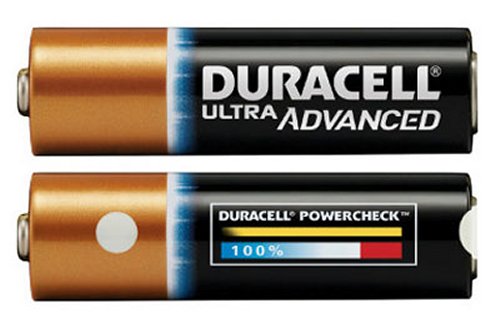
7.  Most Batteries

There isn't much to a battery.  The positive and negative ends are fairly well differentiated.  And most people understand which end goes in certain parts of their electronics.  Perhaps there is some room for improvement, such as making the ends different shapes so that they can only possible fit in one orientation.  The other benefit of the design is that it is very difficult to shock yourself using one of these.  You cannot easily complete the circuit using your thumb and forefinger, since the resistance in your hand is too great.  The only feasible way is to put the battery in your mouth.

8.  Misleading doorbell panel


This doorbell has a sign underneath it labeled "BELL", with an arrow pointing to the left.  Those using it reported looking to the left of the panel for a doorbell before realizing that the arrow had nothing to do with the sign.
What was the arrow for then?  It pointed at the door.


9.  AutoCAD
I don't know why the guy has like 12411 buttons active on his screen though

AutoCAD is a program that is used to create drawings of 2D or 3D objects.  I rarely mess with the 3D side of it, but I do use it professionally, and I can say that it is a very good program, considering the number of features it has.  Each time you try to take an action, it will prompt you in the command window at the bottom to supply the correct arguments, one at a time, or none.
Maybe you notice that there is an excess of buttons on the screen, but those buttons are fully customizable, so that you can have as few buttons as you like.  In addition, each command can be typed if you prefer, and if you want to do something, but aren't sure if it's a feature, just try typing it out (that's how I found the area of an irregular spline).  

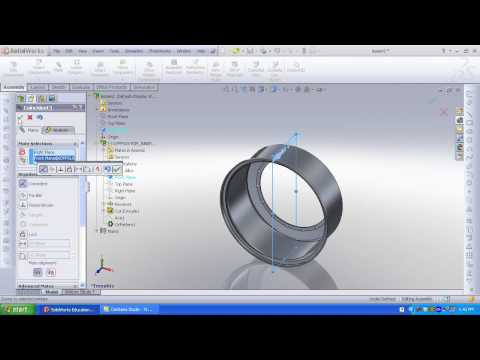
10.  SolidWorks

Like AutoCAD, SolidWorks is another drafting program for computers.  However, SolidWorks is more tailored to 3D applications.  To be fair, I won't complain about making anything 3D in this program, the 2D aspects are troubling enough.  To draw a shape, you must first draw out the shape that you want it to be, and then go back and specify the actual dimensions that the shape should have.  This always throws off my flow, as I prefer to set the length of an object, and then see a line of that length get drawn.  I spent a semester using this for a project before I started using AutoCAD consistently, and, while I was always able to complete my design, I was always frustrated after finishing.

Thursday, September 13, 2012


An Evaluation of the Chinese Room
A psychologist’s attempt to explain computers

In this article, John R. Searle of Berkeley’s Department of philosophy attempts to discourage the idea that a computer could ever “think”.  That is, he is arguing against the notion of strong AI, which I believe would do more for psychology than 100 years of human study (incidentally, it would probably require 100 years of human study to create a strong AI). 

The test used to disprove strong AI is this:  You are locked in a room with a large batch of Chinese writing, which cannot understand at all.  You are then given another batch of symbols with instructions on how the two batches correlate.  A third batch is then given to you, along with instructions to give back symbols from the first two batches based on symbols from the third batch.  Now say that you get so good at doing this, that you can reply to any combination of symbols with the proper Chinese characters so that no Chinese person in another room would be able to tell that you didn’t speak a word of Chinese just by asking you questions (a version of the Turing test).  But the fact remains that you do not at all understand Chinese.
Searle tries to prove his point by oversimplifying it to the point that anyone could see that he was correct in his example.  He is practically describing an encryptor that converts Chinese characters to other Chinese characters, instead of English characters to other English characters (that would make no sense to us).  No one argued that an encryptor understood English, but that’s essentially what he’s arguing. 

He addresses the “Systems” reply, first by calling it embarrassing, but more irritating is the claim he makes at the end of this reply.  He quotes a man from 1979 who says machines as simple as a thermostat can have beliefs.  Now, I do not believe at all that a thermostat has a belief in the literal sense, but Searle uses the absurdity of the statement in his argument.  He actually says “One gets the impression that people in AI who write this sort of thing think they can get away with it because they don’t really take it seriously, and they don't think anyone else will either. I propose for a moment at least, to take it seriously.”  Why??  It’s just poor debate practice.

My favorite argument is the brain simulator reply, “what if we write a program to simulate the synapses and neural firing of a human brain?”  This sounds legit to me, but Searle breaks it down into a man operating valves and pipes in such a way to mimic neural firings, based on instructions he’s been given to output Chinese answers.  The pipes and man still have no understanding of Chinese.  Now I just want to say that synapse firing in the brain is all chemistry and physics, which are the instructions of the universe.  But…that means Searle proves another valuable point:

Humans Can’t Understand


I’m pretty much out of space, but I still want to list the biggest issue with even arguing AI ever.  He didn’t define his terms.  At no point does he say what it even means to understand something; he didn’t list what qualifies as a belief.
In addition, 60% of the way through the paper, he basically recants everything he said for the first 10 pages.  He acknowledges that an exact artificial replica of a human would be able to think, and that a program could think, because minds are programs, but a program within a computer could not think.  He disagrees with himself, so I really can’t be swayed by his argument.